
What I Stand For
Shaped by education, family and the values of those who guided him, a lawyer reflects on his journey and the responsibility of representing others. For him, success lies not just in winning cases, but in giving people a voice.
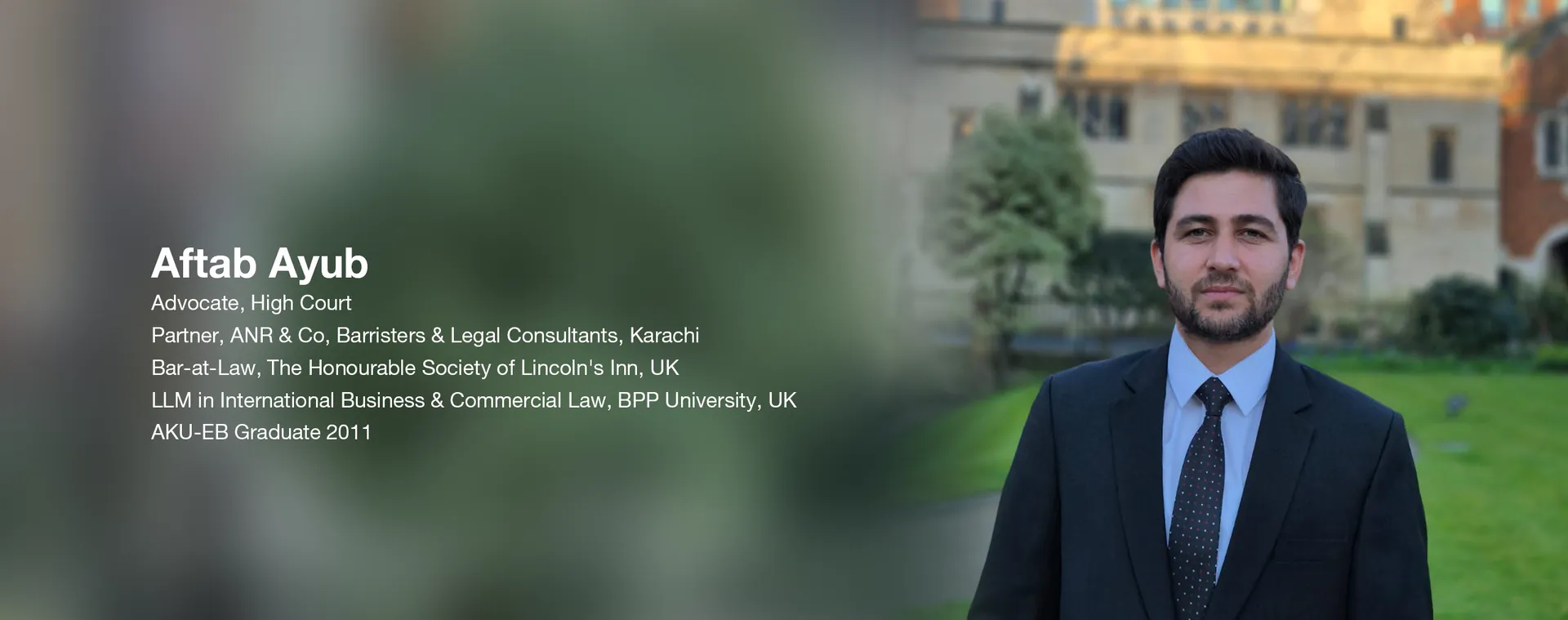
There is a moment, just before I begin speaking in court, when I become conscious of what has brought me there.
A client has walked into my office carrying a problem that, to them, is much more than a legal matter. It may be a dispute over property, a family matter, a livelihood, or a right they believe has been taken away. They have told me their story, handed me their documents and, ultimately, placed their case in my hands.
Then I stand before the court. For those few minutes, their story becomes my responsibility.
I have spent almost a decade practising law, and I have come to understand what makes the profession so demanding. A lawyer does not simply argue a case; he speaks when someone is depending on him to be heard.
When I think about what it means to represent another person, I also think about the people who taught me the value of an opportunity.
My grandfather, Muhammad Ibrahim, was one of the few educated people in our community during the 1960s and 1970s. He believed deeply in education and devoted himself to the development of those around him. One of his most significant contributions was helping to introduce co-education. At a time when there was no private school for boys anywhere in the area, his efforts opened doors to educational opportunities that otherwise would not have been available to many children, including my brother and me.
I was too young to understand the significance of his choices then, but as I have grown older, I have come to appreciate the influence of his example.
My uncle, Muhammad Rahim, carried that commitment forward in our family. He invested in our education and supported and encouraged me throughout my journey. His belief in education gave me the confidence and freedom to pursue my own ambitions.
When I later joined the AKU-EB system, I encountered a different way of learning. We were encouraged to understand rather than simply memorise, to question, think independently and consider different perspectives. I did not realise it then, but those habits would become central to my life as a lawyer.
While many of my peers were considering medicine or engineering, I found myself drawn to law. I wanted a profession that would challenge me to think critically, question assumptions and help others navigate difficult circumstances. My teachers took that ambition seriously and encouraged me to pursue it.
That encouragement mattered.
But every achievement has a story behind it that does not appear on a CV.
While I was in the United Kingdom pursuing my Bar-at-Law and LLM, my wife, Dr Shabana Wali, cared for our one-year-old daughter while continuing her demanding work with the World Health Organization. There were two careers to sustain, a young child to raise and a family to hold together. Her sacrifices are inseparable from my own journey.
Perhaps this is what I understand more clearly now: no one arrives anywhere alone.
"...Do not choose your future simply because something is considered safe, popular or prestigious. Take your education seriously. Learn to think, question and listen. Most importantly, have the courage to pursue what genuinely interests you."
When I walk into a courtroom today, I carry much more than a law degree. I carry my grandfather’s example, my uncle’s unwavering support, the encouragement of teachers and the sacrifices of a family that invested in my education.
I also carry the stories of people who come to me when they cannot afford to be represented. Through our office, I handle pro bono cases for people who cannot afford legal representation. There is a particular satisfaction in seeing someone leave with the relief of knowing that they have been heard and that their problem matters.
For me, that is the human side of law.
Behind every case is a person. When that person is sitting behind me in a courtroom, I know I am not there simply to argue a legal issue. I am there because, for that moment, their ability to be heard has been entrusted to me.
That has changed the way I think about success. I would like to be remembered not simply as someone who won cases, but as someone who used his profession to help people, particularly those who genuinely could not afford representation.
To the students who may be reading this, I would say: do not choose your future simply because something is considered safe, popular or prestigious. Take your education seriously. Learn to think, question and listen. Most importantly, have the courage to pursue what genuinely interests you.
You may not have everything figured out at the beginning. What matters is that you remain open to learning, make the most of the opportunities you are given and remember the people who helped you along the way.
One day, when you find yourself where you once only hoped to be, ask yourself what you can do with the opportunity you have been given.
For me, the answer has been to stand for others.
Perhaps that is the greatest lesson I inherited from my grandfather: education is not only about changing your own life. It is about what you choose to do with that change.